Used in therapy rooms, clinics, and high-stress environments.
This page explains why tranquil, low-stimulation imagery can act as a gentle safety cue—supporting regulation and ease—while remaining ethically grounded (not therapy, not treatment).
Many rooms feel unsettling even when they’re tidy—because visual load (high contrast, glare, crowded imagery, intense symbolism) keeps the brain scanning. R&E is built to do the opposite: visually quiet art that lets the eyes land and the body soften.
Meet the artist.
I’m Alena—psychologist and artist. I design art for emotionally safe spaces: low-contrast, nature-led imagery that is aesthetically beautiful and intentionally non-demanding. I translate the research in plain language and keep the claims ethical: supportive, not prescriptive.
There is a growing body of peer-reviewed research showing that exposure to natural imagery and visually coherent environments can support emotional regulation, stress reduction, and feelings of safety. While individual taste matters, the principles used in these artworks are based on well-established findings rather than trends.
Research in environmental psychology and neuroscience shows that visual environments influence the nervous system. Low-contrast imagery, natural scenes, and gentle spatial depth can reduce cognitive load and support parasympathetic nervous system activity. This doesn’t require belief or effort—it's a physiological response to reduced visual demand.
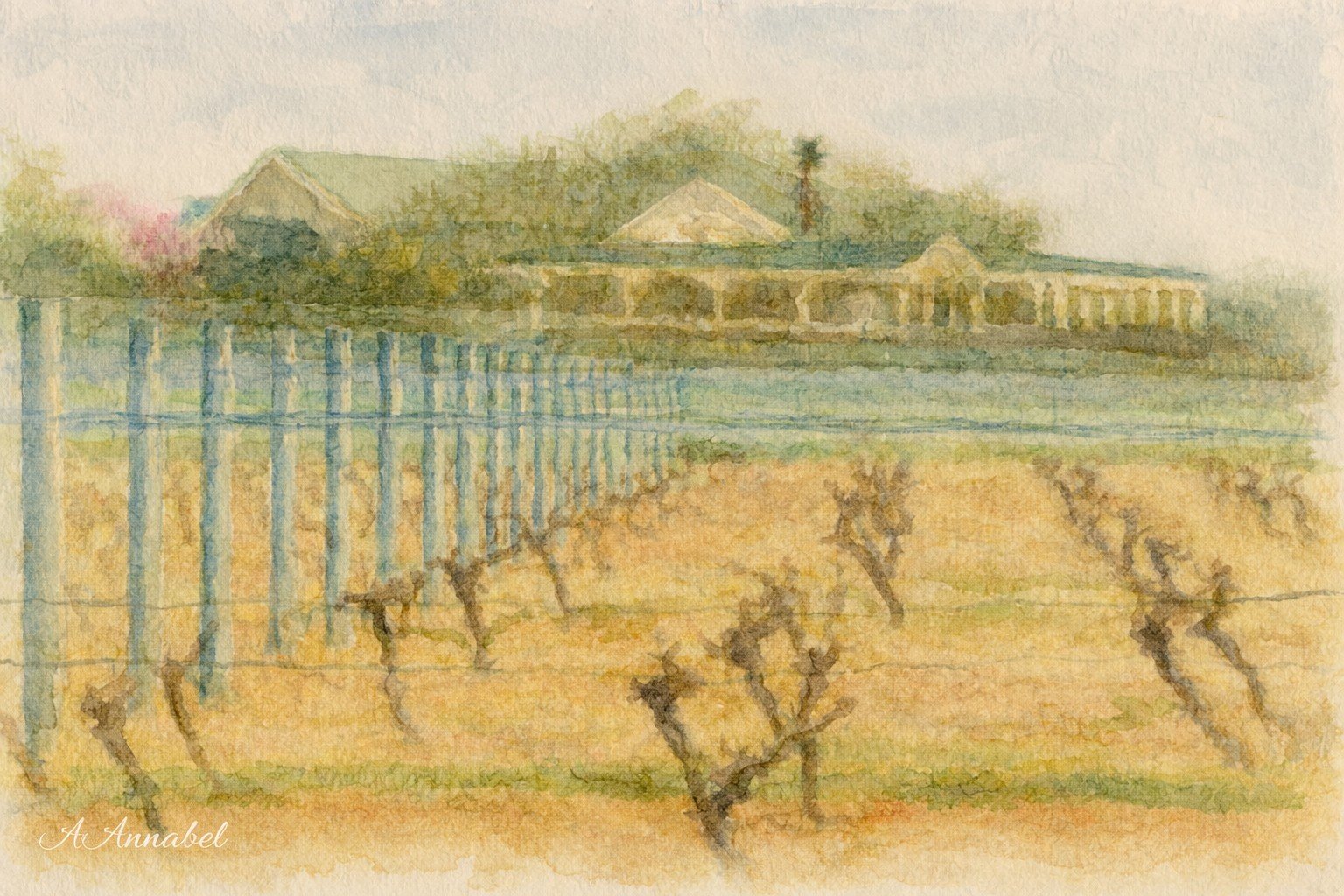
Vineyard Landscape is a soft, atmospheric landscape designed to bring the grounded calm of country spaces into your home. Weathered posts and long vineyard rows draw the eye gently forward toward a distant winery building, softened by haze and light. The scene feels open and quiet—structured enough to feel steady, yet painterly enough to feel restful.
This artwork is all about gentle perspective and breathing space. The repeating lines of the posts create a sense of order without harshness, while the vines sit low and understated, leaving plenty of room for the sky and distance to soften the overall mood. The palette leans warm and muted—sun-washed golds, calm greens, and cool blue-grey tones that sit comfortably in neutral interiors and add a hint of rustic character without dominating a room.
Vineyard Lines is the kind of piece that helps a space feel settled and uncluttered. It offers a quiet focal point—something your eyes can return to when you want the atmosphere to feel calmer and slower. The distant buildings are intentionally softened, creating a sense of place without pulling attention into sharp detail. It’s pastoral, but not busy; nostalgic, but still airy and modern.
This print works beautifully in kitchens, dining rooms, hallways, living spaces, bedrooms, reading corners, and home offices—especially where you’re styling with timber, linen, stone, and warm neutrals. It’s also well-suited to therapy rooms, waiting areas, and calm workspaces where visual softness matters and you want the room to feel welcoming and grounded.
Digital Download
Instant access after purchase
High-resolution file suitable for printing
Print at home or through a professional service
You will receive high-resolution digital files sized for popular print formats, so you can print and frame the piece at a scale that suits your space and printing options up to 50×70cm.
See Shipping & Returns for details.
“Want more like this? See the Water Themes Collection ”
Learn more about how visual environments affect stress in our 👉 Science behind Calm PDF (Free)
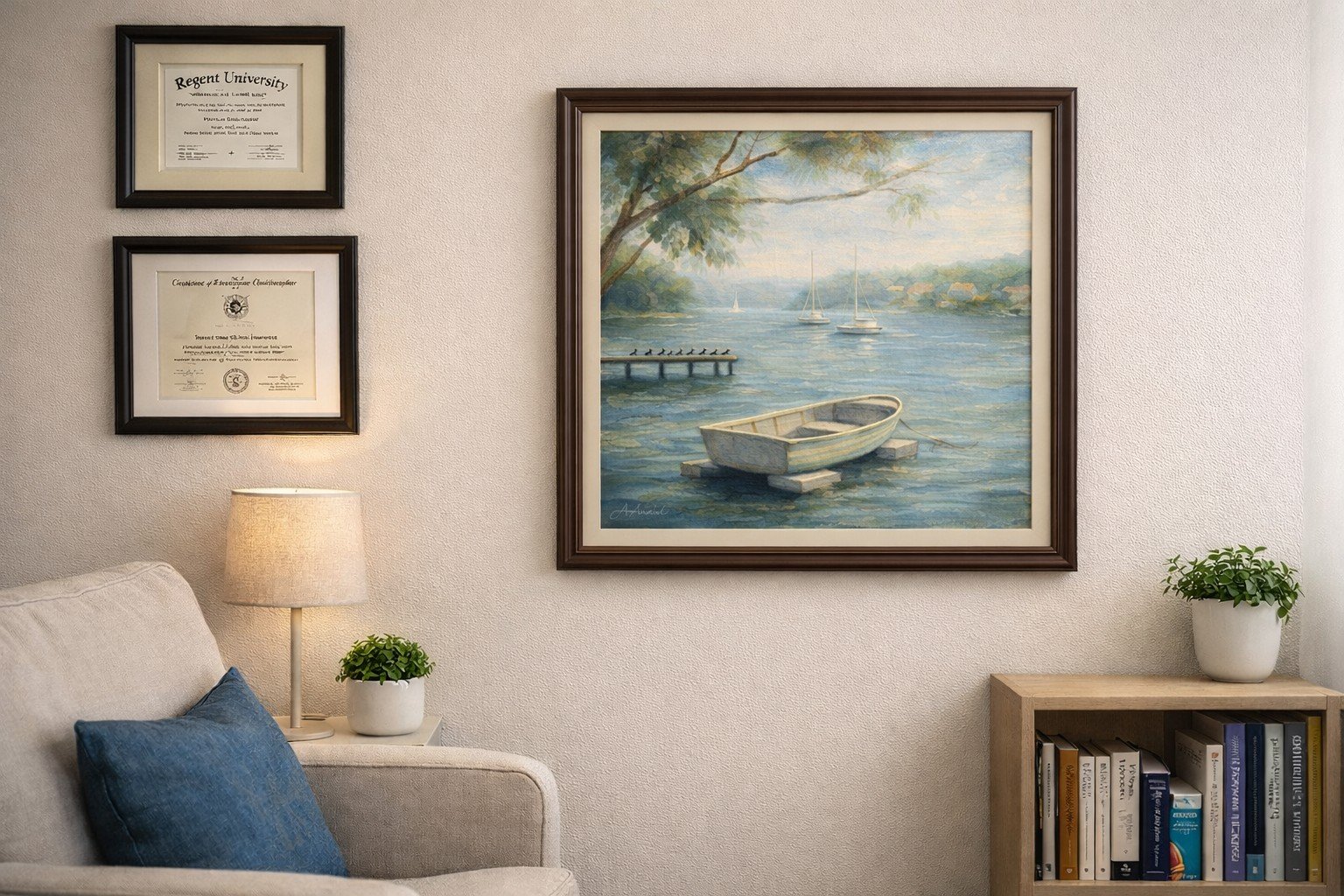
R&E pieces are curated and finished using calming design principles—soft transitions, gentle contrast, and breathable space—so the art supports regulation rather than stimulating the nervous system. Explore the why of R&E art.
The artworks are created with sensitivity to visual load, contrast, and complexity. They avoid sharp contrasts, visual clutter, and demanding focal points, making them suitable for people who are easily overstimulated.
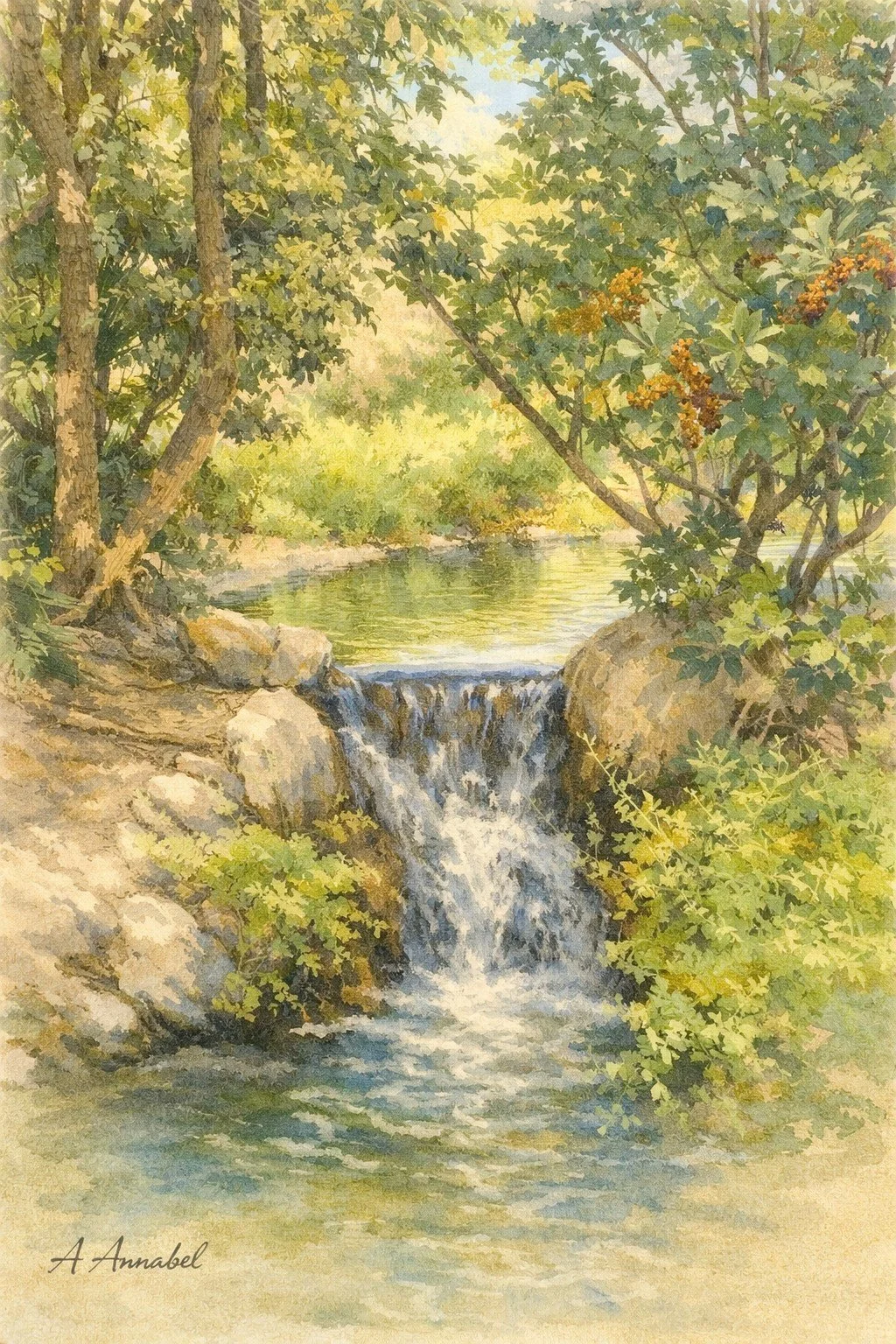
Quiet Cascade is a serene forest oil-style print that captures the moment where moving water and still water meet. A gentle waterfall tumbles over worn rocks into a clear pool, framed by leafy trees and soft greenery. Light filters through the foliage and touches the surface of the water, creating a quiet shimmer that naturally draws the eye – and then lets it rest.
The brushwork is intentionally soft and impressionistic rather than sharp or hyper-real. Edges are slightly blurred, colours are blended, and the textures feel organic, echoing the calm, repetitive movement of water instead of high drama. Warm stone tones sit alongside muted greens and gentle blue-greens in the water, creating a palette that feels grounded, cool and refreshing at the same time.
This piece is designed as visual “exhale” art – something you can glance at between tasks or sessions to give your nervous system a small moment of ease. The vertical composition leads the eye downward with the waterfall, then lets it settle in the still pool at the bottom. That downward movement can feel like a micro-release: thoughts soften, shoulders drop, and the space feels a little quieter.
Quiet Cascade works beautifully in:
Living rooms and reading corners where you want a calm focal point
Bedrooms, as a soft transition piece between the day and sleep
Counselling, therapy or coaching rooms, supporting de-escalation and emotional regulation
Waiting rooms or reception areas, where gentle movement in the artwork can help ease anticipatory anxiety
It pairs especially well with other nature pieces from the Recalibrate & Exhale collection – coastal scenes, soft skies or forest paths – to build a tranquil, cohesive gallery wall.
Digital Download
Instant access after purchase
High-resolution file suitable for printing
Print at home or through a professional service
You will receive high-resolution digital files sized for popular print formats, so you can print and frame the piece at a scale that suits your space and printing options up to 50×70cm.
See Shipping & Returns for details.
“Want more like this? See the Water Themes Collection ”
Learn more about how visual environments affect stress in our 👉 Science behind Calm PDF (Free)
These artworks are not designed to produce a noticeable emotional reaction. Their role is subtle: to reduce background strain on attention and the nervous system. Many benefits occur below conscious awareness, similar to how lighting or noise levels affect comfort without being actively noticed.
These artworks are designed to reduce visual overstimulation and create calmer environments.
You can learn more about the principles behind this work here.
👉 Link “[Learn more]
Product Details
Format: Digital download
Delivery: Instant download
File type: High-resolution JPG (digital option)
A gentle world of imagination and calm
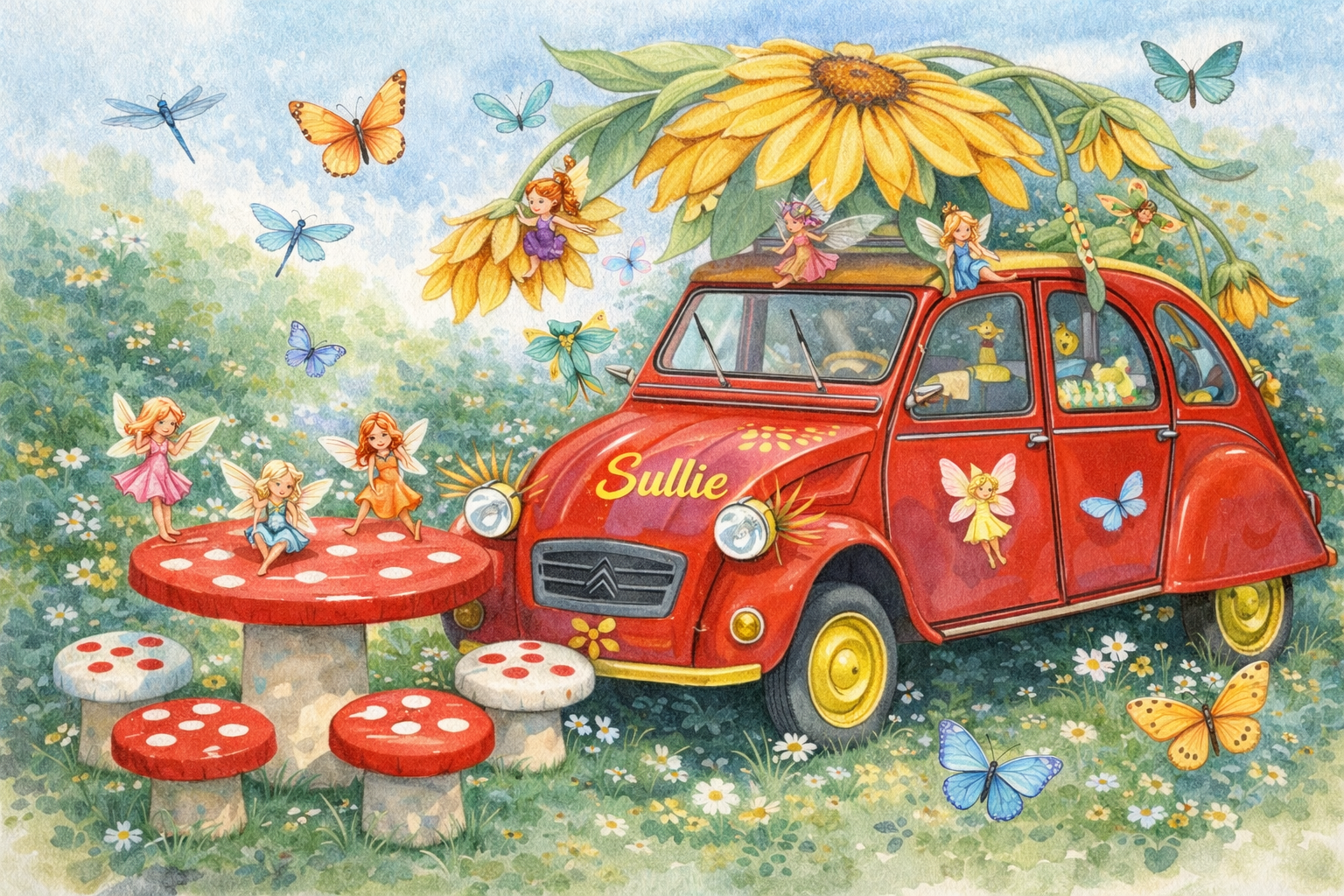
Sullie sits quietly within a soft, nature-filled landscape — a small red car resting among oversized flowers, drifting light, and a sense of quiet discovery.
This piece invites a slower pace.
Rather than stimulating through bright intensity or busy detail, it offers a gentle, story-like environment where the eyes can wander without effort.
Designed for calm, child-friendly spaces
Children’s environments often become visually busy without intention.
Sullie was created to offer something different — a softer visual experience that supports rest, imagination, and emotional ease.
Subtle colour transitions and open composition allow the artwork to feel:
calming rather than overwhelming
engaging without being demanding
imaginative without overstimulation
Where this piece works best
Ideal for spaces where a sense of calm and safety is important:
Children’s bedrooms and nurseries
Reading corners and quiet play areas
Therapy and support environments
Family living spaces
What you receive
This is a digital download.
No physical item will be shipped.
You receive high-resolution JPG files designed for printing at home or through a professional print service (up to 50×70cm).
Discover more pieces designed to create gentle, supportive environments:
👉[ View calming art collection]
👉[Learn about the science of art]